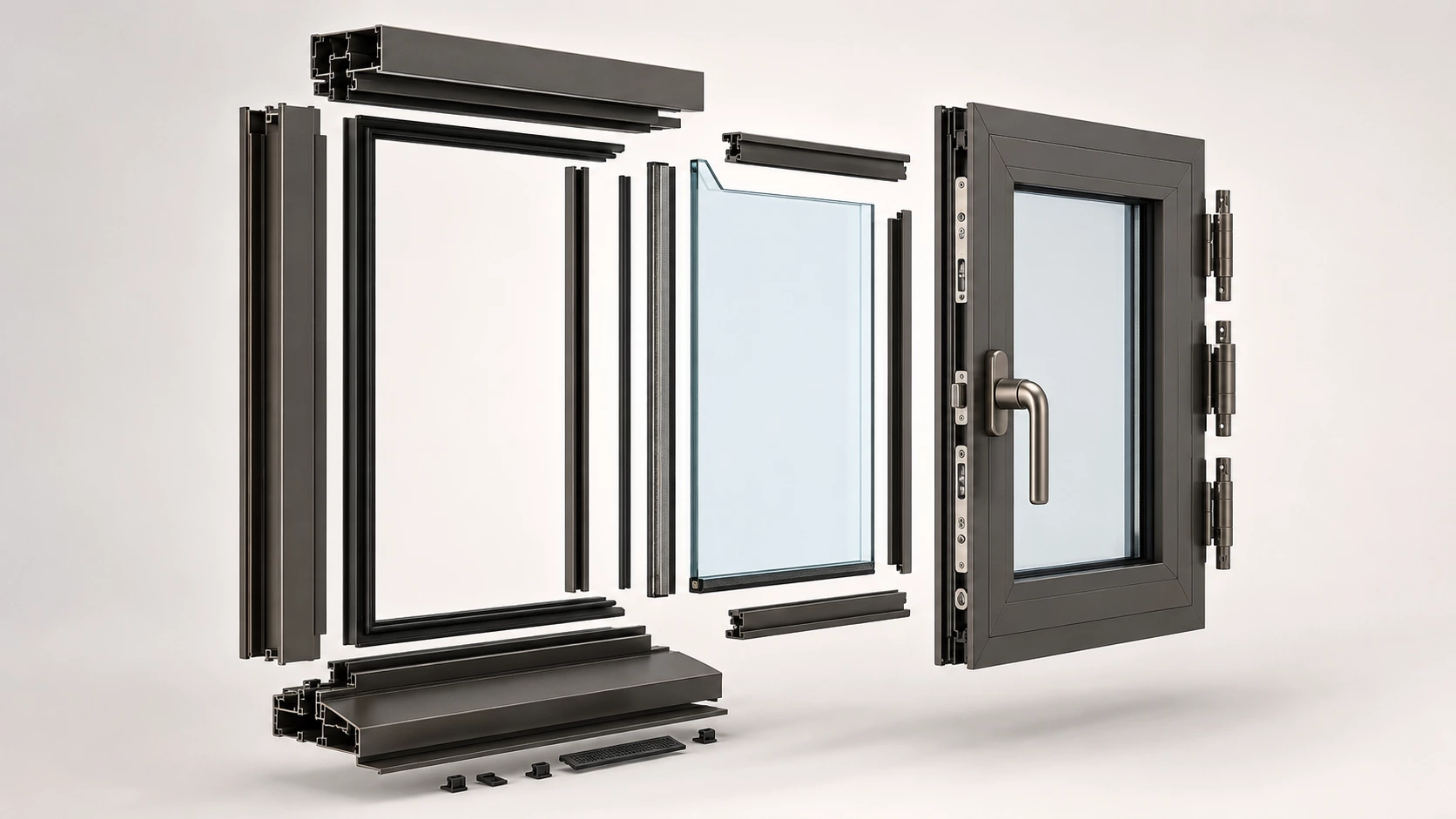
The main parts of a window are the frame, sash, glass, glazing system, hardware, weatherstripping, and drainage components. The frame supports the complete window, the sash holds the glass, the hardware controls operation, and the seals help prevent air and water leakage. Understanding these components makes it easier to compare window products, identify problems, and select the right system for a home or building project.
Main Parts of a Window at a Glance
| Window Part |
Main Function |
Common Risk |
| Frame |
Supports the complete window system |
Movement, poor insulation or water leakage |
| Sash |
Holds the glass and may open or slide |
Misalignment or difficult operation |
| Glass |
Provides light, views and insulation |
Breakage, heat transfer or seal failure |
| Hardware |
Controls opening, closing and locking |
Wear, corrosion or incomplete locking |
| Weatherstripping |
Seals gaps between the sash and frame |
Drafts, noise or water penetration |
| Weep system |
Drains water toward the exterior |
Blockage and water accumulation |
| Installation components |
Connect and seal the window to the wall |
Hidden air or moisture leakage |
Image recommendation: Add an original labeled window parts diagram here. Suggested alt text: “Labeled diagram showing the main parts of a window frame and sash.”
Parts of a Window Frame
The window frame is the fixed structure installed inside the wall opening. It supports the sash or glass and transfers loads to the surrounding building structure.
Head, Jambs and Sill
The three basic window frame components are:
- Head: The horizontal section at the top of the frame.
- Jambs: The vertical sections on the left and right sides.
- Sill: The bottom horizontal section, usually designed to direct water toward the exterior.
Frames may be made from aluminum, vinyl, wood, fiberglass or composite materials. Material selection affects structural strength, insulation, maintenance requirements and appearance.
For example, thermal-break aluminum windows use a low-conductivity barrier between the interior and exterior aluminum sections. This improves thermal performance while maintaining the slim profiles commonly required for modern villas, apartments and commercial buildings.
Mullion, Muntin and Grille
A mullion is a structural vertical or horizontal member that connects or separates complete window units.
A muntin traditionally divides individual panes of glass within a sash. Modern grilles often create the same divided-glass appearance without separating the glass into individual panes.
Understanding these differences helps buyers communicate design and structural requirements accurately.
Casing, Stool and Apron
Casing is the interior or exterior trim installed around a window. It covers the installation joint and creates a finished appearance.
The stool is the flat interior ledge below the window, while the apron is the decorative trim directly beneath it. These components improve appearance but should not be treated as the primary waterproofing system.
Nailing Fin, Flashing and Sill Pan
A nailing fin helps secure certain new-construction windows to the wall. Flashing protects the joint between the window and the surrounding structure.
A sill pan is installed beneath the window to collect incidental water and direct it toward the exterior. It is part of the installation waterproofing system rather than decorative trim.
Parts of a Window Sash
The sash is the framed section that holds the glass. Depending on the window style, it may be fixed, slide vertically or horizontally, or swing open.
Rails and Stiles
Rails are the horizontal parts of a sash, while stiles are the vertical parts. Together, they form the structure that supports the glass.
In a double-hung window, the rails that meet in the center are called meeting rails or check rails. This is normally where the sash lock is located.
Balances and Tilt Latches
Balances are mechanisms used in single- and double-hung windows to support the weight of the sash. They make the sash easier to lift and help prevent it from falling closed.
Tilt latches allow certain sashes to tilt inward for cleaning. Damaged balances or latches may make the window difficult or unsafe to operate.
Window Glass and Glazing Components
Glass has a major effect on thermal performance, safety, sound reduction and indoor comfort.
Window Pane and Insulated Glass Unit
A window pane is an individual sheet of glass. Modern windows commonly use an insulated glass unit, or IGU, consisting of two or more panes separated by a sealed space.
Common glass options include:
- Double- or triple-pane glass
- Tempered safety glass
- Laminated security glass
- Low-E glass
- Tinted or reflective glass
- Low-iron glass
The correct specification depends on the local climate, building orientation, window size, safety requirements and desired acoustic performance.
Spacer, Desiccant and Gas Fill
A spacer maintains the correct distance between the panes in an IGU. It works with the perimeter seal and desiccant to control moisture inside the sealed unit.
The space between the panes may contain argon or another insulating gas. If the perimeter seal fails, moisture can enter the unit and cause fogging between the panes.
Warm-edge spacers can also help reduce heat transfer around the perimeter of the glass.
Glazing Bead
Glazing beads, also called glass stops, hold the glass securely inside the sash or frame. Replacement beads must match the original profile and glass thickness.
Loose or damaged glazing beads can allow glass movement, reduce sealing performance and create a safety risk.
Window Hardware, Seals and Drainage
Window hardware includes handles, locks, hinges, rollers, tracks, crank operators, friction stays and multi-point locking systems.
The required hardware depends on the opening style:
| Window Type |
Main Operating Components |
| Casement |
Hinges, sash, handle, operator and multi-point lock |
| Sliding |
Rollers, tracks, sliding sash and side lock |
| Double-hung |
Upper and lower sashes, balances, check rails and tilt latches |
| Awning |
Top hinges, operator, sash and locking points |
| Fixed |
Frame, glass, glazing beads and seals |
Large or heavy sashes require hardware with sufficient load capacity. Coastal projects may also require corrosion-resistant hardware because moisture and salt can accelerate damage to untreated metal components.
Project Specification Note
Hardware, glass and frame profiles should be selected as one system. Increasing the glass thickness or sash size also increases weight and operating loads. If the hardware capacity is not adjusted accordingly, the sash may sag, become difficult to operate or fail to lock evenly.
This is especially important for large villa windows, floor-to-ceiling openings and projects exposed to strong wind or coastal conditions.
Weatherstripping and Gaskets
Weatherstripping and gaskets create a flexible seal between the frame and operable sash. They help reduce:
- Air leakage
- Water penetration
- Outside noise
- Dust infiltration
- Unwanted heat transfer
Gaskets may shrink, crack or harden over time. Damaged seals should be replaced with compatible profiles rather than covered with excessive sealant.
Weep Holes
Weep holes allow water inside the outer frame channels to drain safely toward the exterior. They should remain clear of paint, dirt and installation sealant.
Blocking these openings can trap water inside the frame and increase the risk of leakage, corrosion or damage to surrounding finishes.
Common Window Problems, Causes and Risks
| Problem |
Likely Cause |
Recommended Solution |
Risk if Ignored |
| Air leakage |
Worn gaskets, sash misalignment or installation gaps |
Replace seals, adjust hardware and inspect the perimeter joint |
Higher energy use and moisture entry |
| Water leakage |
Blocked weep holes, failed sealant or damaged flashing |
Clean drainage channels and identify the entry point before resealing |
Mold, corrosion and wall damage |
| Fog between panes |
Failed IGU perimeter seal |
Replace the insulated glass unit or sash |
Reduced visibility and insulation |
| Difficult operation |
Dirty tracks, worn rollers, loose hinges or frame movement |
Clean, lubricate and adjust compatible hardware |
Damage to handles, hinges or glass |
| Window does not lock |
Sash misalignment or worn locking hardware |
Adjust the sash and replace damaged components |
Reduced security and sealing pressure |
Do not force a window that is difficult to operate. This may damage the hardware or place uneven pressure on the glass. Persistent leakage, structural movement or broken safety glass should be inspected by a qualified professional.
How to Choose the Right Window System
Window components should be selected as a coordinated system. Before ordering windows, consider:
- Window style and opening direction
- Frame material and thermal break
- Glass type and Low-E coating
- Local climate and building orientation
- Wind and water exposure
- Hardware capacity and corrosion resistance
- Acoustic and security requirements
- Installation and flashing details
- Availability of replacement components
For projects in the United States, values such as U-Factor, Solar Heat Gain Coefficient, Visible Transmittance and air leakage can be compared through the. Climate-specific window guidance is also available from georgewindowdoor.com.
For villas, apartments and whole-house projects, provide the window supplier with architectural drawings, opening sizes, project location and required performance values. This allows the frame, glass, hardware and sealing system to be configured together.
Frequently Asked Questions
What Are the Basic Parts of a Window?
The basic parts are the frame, sash, glass, hardware, weatherstripping and drainage system. Additional components may include screens, grilles, casing, flashing and a sill pan.
What Is the Difference Between a Window Frame and Sash?
The frame is the fixed structure attached to the building. The sash is the section that holds the glass and may remain fixed, slide or swing open.
What Holds the Glass in a Window?
The sash or frame supports the glass, while glazing beads, gaskets, sealants or glazing compounds secure it in position. The exact method depends on the window system.
Can One Window Part Be Replaced Without Replacing the Entire Window?
Glass units, weatherstripping, locks, handles, rollers and some sashes can often be replaced separately. A complete replacement may be necessary if the frame is severely damaged, distorted or leaking because of installation failure.
Final Thoughts
Every part of a window contributes to structural performance, insulation, ventilation, security or weather resistance. A strong frame cannot compensate for unsuitable glass, damaged seals or undersized hardware, so all components should be specified and installed as a complete system.
Planning a villa, apartment or whole-house project? Send us your drawings, opening sizes, project location and performance requirements to receive a project-specific window recommendation. georgewindowdoor.com