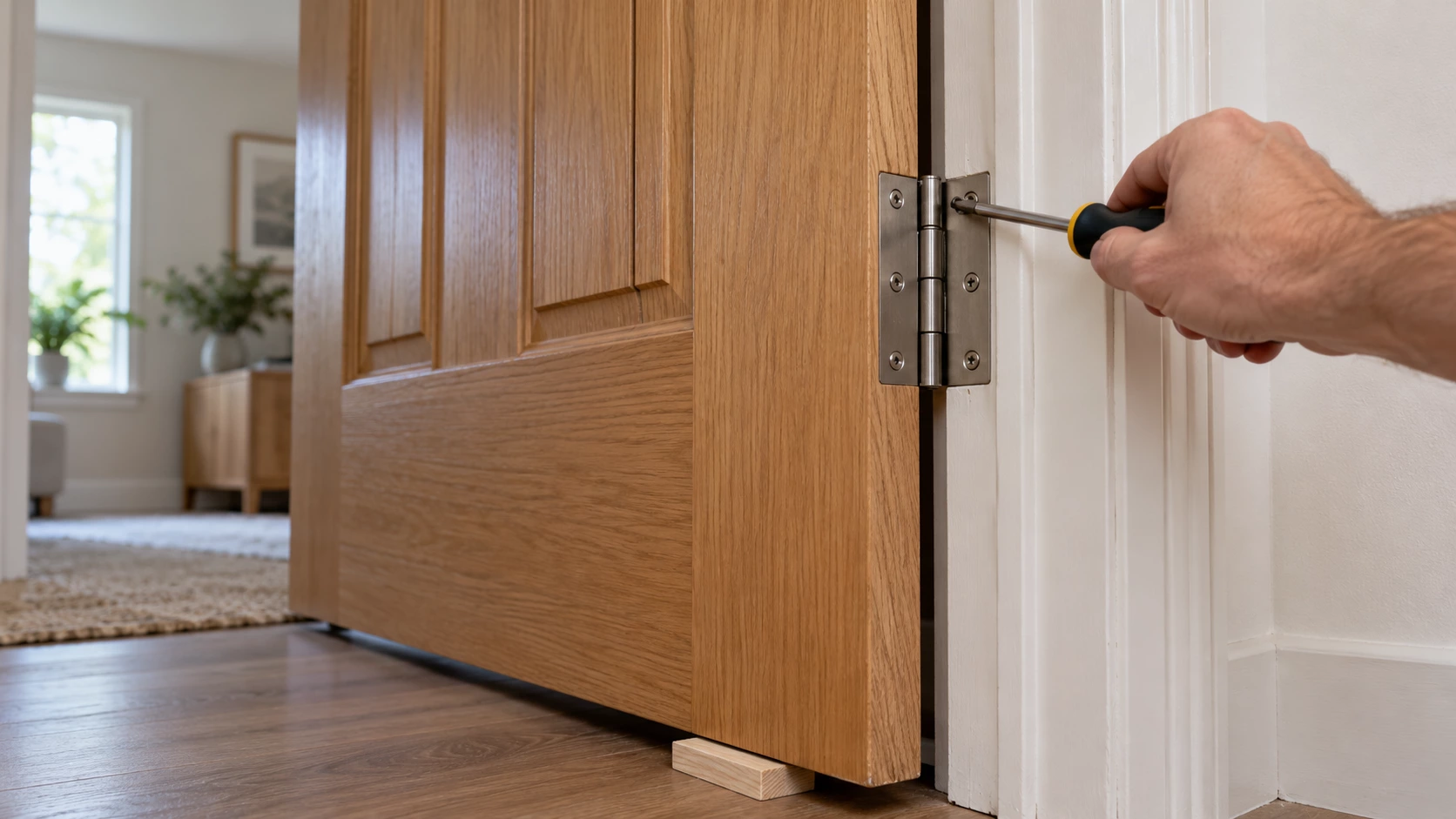
To fix a sagging door, check its hinges first. Tighten any loose screws, repair holes that no longer hold a screw, and inspect the top hinge for a secure connection to the frame. If the hinges are sound but the door still sits unevenly, the hinge itself or the door frame may need attention. Identify the cause before trimming the door.
Find Out Why the Door Is Sagging
Close the door slowly and look at the gap between the door and its frame. Note where it rubs and whether the latch meets the strike plate.
|
What you notice
|
What to check first
|
|
The latch-side edge drops or scrapes the floor
|
Loose screws, especially at the top hinge
|
|
A hinge moves when you gently lift the door by its handle
|
Loose screws or stripped screw holes
|
|
The screws are tight, but the hinge has visible play
|
A worn or bent hinge
|
|
The door still binds after the hinges are secured
|
Whether the frame is square or has shifted
|
|
The door closes but will not latch
|
Door alignment and the strike plate position
|
A rubbing door is not always a sagging door. If it only sticks during humid weather and the gaps otherwise look even, wood swelling may be the cause. If the frame has moved, adjusting the hinges alone may not provide a lasting fix.
What You May Need
Start with a screwdriver and a doorstop or wedge to support the door. Depending on what you find, you may also need wood dowels, wood glue, a drill and pilot bit, a suitable longer screw, or a replacement hinge. You do not need every item for every repair.
How to Fix a Sagging Door
1. Support the door and tighten the hinges
Open the door partway and place a wedge beneath its outer edge. Check the screws on both the door and frame sides of each hinge, starting at the top. Tighten them by hand, then test the door.
If a screw turns without tightening, stop. Its hole may be stripped, and continued turning can make the damage worse.
2. Repair a stripped screw hole
For a stripped hole in a wood jamb, remove the affected screw while keeping the door supported. Fit a wood dowel into the hole with wood glue, allow the glue to cure according to its instructions, and trim the dowel flush if needed. Drill a pilot hole before refitting the hinge screw.
Work on one hinge at a time. If the surrounding wood is split or soft, assess the jamb itself rather than repeatedly repairing the screw hole.
3. Check the top hinge’s connection to the frame
If the top hinge is pulling away from the jamb, a properly sized longer screw may secure it to the framing behind the jamb. Check the construction behind the hinge before drilling. The screw head must sit flush in the hinge plate so it does not interfere when the door closes.
A longer screw helps only when there is sound framing for it to grip. It will not repair a worn hinge or straighten a distorted frame.
4. Replace a worn hinge if needed
With the door supported, check whether a hinge pin or leaf is worn, bent, or loose even after its screws are secure. Replace damaged hardware with a hinge suitable for the door’s size and weight. Change one hinge at a time and test the door after the repair.
5. Test the door
Remove the support and open and close the door several times. Check that it moves freely, the gap around it looks reasonably even, and the latch engages without lifting or forcing the door.
If it still rubs, recheck where contact occurs. Do not plane the door simply to hide a hinge or frame problem: once the alignment is corrected, trimming may leave an excessive gap.
When Should You Call an Installer?
Get professional help if the jamb is split or moving, the frame appears out of square, or the door cannot close and lock securely. Heavy exterior and glazed doors need particular care because they can shift when a hinge is loosened. For a fire-rated door, check its manufacturer’s requirements before changing the hardware.
Frequently Asked Questions
Can you fix a sagging door without taking it off?
Often, yes. You can inspect and tighten the hinges with the door in place. Keep it supported if you repair a screw hole or replace a hinge.
Why does my door still sag after I tighten the screws?
A screw may be spinning in a stripped hole, a hinge may be worn, or the jamb may be moving. Gently lift the supported door and watch which part shifts.
Will a longer screw fix a sagging door?
It may help if the top hinge needs a stronger connection to sound framing behind the jamb. It will not solve every cause of sagging.
Should I move the strike plate if the door will not latch?
First check whether the door has dropped. Correcting its alignment may bring the latch back into position without moving the strike plate.
Repair or Replace?
If the door or frame is damaged beyond a practical repair, explore GEORGE’s door options. Photos of the opening, approximate dimensions, and a description of where the door binds will help you discuss a suitable replacement.